Inventory sync for online stores: keeping supplier stock accurate
For a store that sells from supplier warehouses, the stock figure on a product page is a promise. If it says "in stock" and the supplier ran out yesterday, the order turns into an apology, a cancellation and sometimes a refund. Inventory sync is about keeping that promise without checking each product by hand.
What needs to be synchronised
- Supplier stock from price lists, feeds or APIs, usually updated once or several times a day.
- Your own warehouse stock, if you keep any.
- Several suppliers for one product, whose quantities may add up or replace each other.
- Every channel you sell on: website, marketplaces, product feeds.
Where sync usually goes wrong
Stock statuses instead of numbers
Many suppliers send "in stock", "limited" or ">50" instead of a quantity. These need clear rules: what number does "limited" mean in your store?
Products missing from the latest file
If a product is no longer in the supplier's file, it is usually out of stock or discontinued. A sync that only updates products present in the file leaves the old quantity in place.
Updates that come too late
Syncing once a day, at the wrong time, can leave hours where stock is wrong. Align the schedule with the times suppliers publish their data.
Different numbers on different channels
If each channel is updated separately, they drift apart. Stock should be calculated once and sent everywhere from the same source.
A reliable setup
- Collect stock from all suppliers and warehouses in one catalog.
- Translate text statuses into quantities with fixed rules.
- Treat products missing from a supplier's file as unavailable from that supplier.
- Decide which supplier is used first when several have the item.
- Export the same figures to every channel on a schedule.
Inventory sync with YfiFX
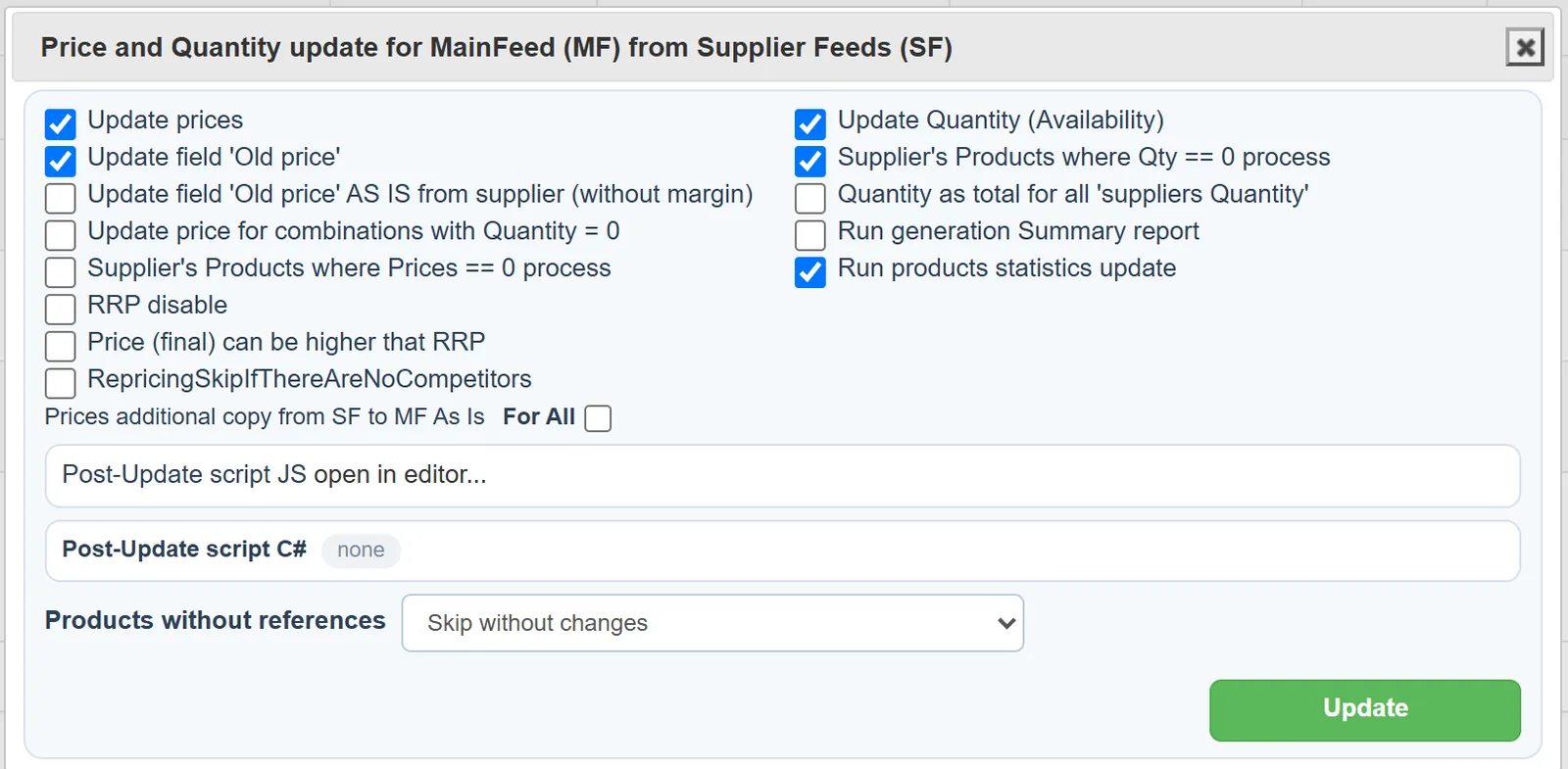
YfiFX combines stock from several suppliers and warehouses in one catalog and keeps it updated from their price lists, feeds and APIs. You can show only products that are actually available and set supplier priority for overlapping items. The same data is exported to each of your channels, whether that is Shopify, WooCommerce, OpenCart, Horoshop, Prom.ua or an XML feed, as part of a scheduled chain of import, recalculation and export.
Frequently Asked Questions
How does YfiFX help prevent overselling?
Stock is updated from supplier data on every scheduled run, and you can export only products that are actually available, so items that sold out at the supplier stop being offered in your store.
Can stock from several warehouses or suppliers be combined?
Yes. Stock from different warehouses and suppliers is combined in one catalog, with supplier priority for products available from more than one source.
How often is stock updated?
On the schedule you set. The number of automatic runs per day depends on your plan: one on Free and up to four on Business.
Related Articles
Set it up once. YfiFX does the rest
14 Days Free Trial. Sign up and import your first price list today.