Setting up price monitoring: a step-by-step plan
Price monitoring sounds simple: watch competitor prices and react. In practice, a badly set up system produces noise. It tracks the wrong products, compares mismatched items and flags changes nobody acts on. A small, well-planned setup is more useful than a large one.
Step 1. Choose the products
Start with the products where price decides the sale: your bestsellers, items with many sellers on the market and products customers can easily compare. A few hundred carefully chosen products often cover most of the revenue that is at risk.
Step 2. Choose the competitors
Pick stores and marketplaces your customers actually consider. Leave out sellers with very different terms, such as grey imports without warranty, unless that is your market too.
Step 3. Match products precisely
Link your products to competitor listings by barcode, manufacturer part number or a checked URL. A comparison of slightly different models is worse than no comparison, because it leads to wrong decisions.
Step 4. Decide what counts as a significant change
Not every movement needs attention. Define thresholds that matter for your business, for example:
- a competitor's price drops more than 5% below yours;
- you become the most expensive among tracked stores;
- a competitor runs out of stock on a product you have.
The last one is easy to overlook and often the most profitable: when competitors are out of stock, you may not need to be the cheapest.
Step 5. Set the schedule
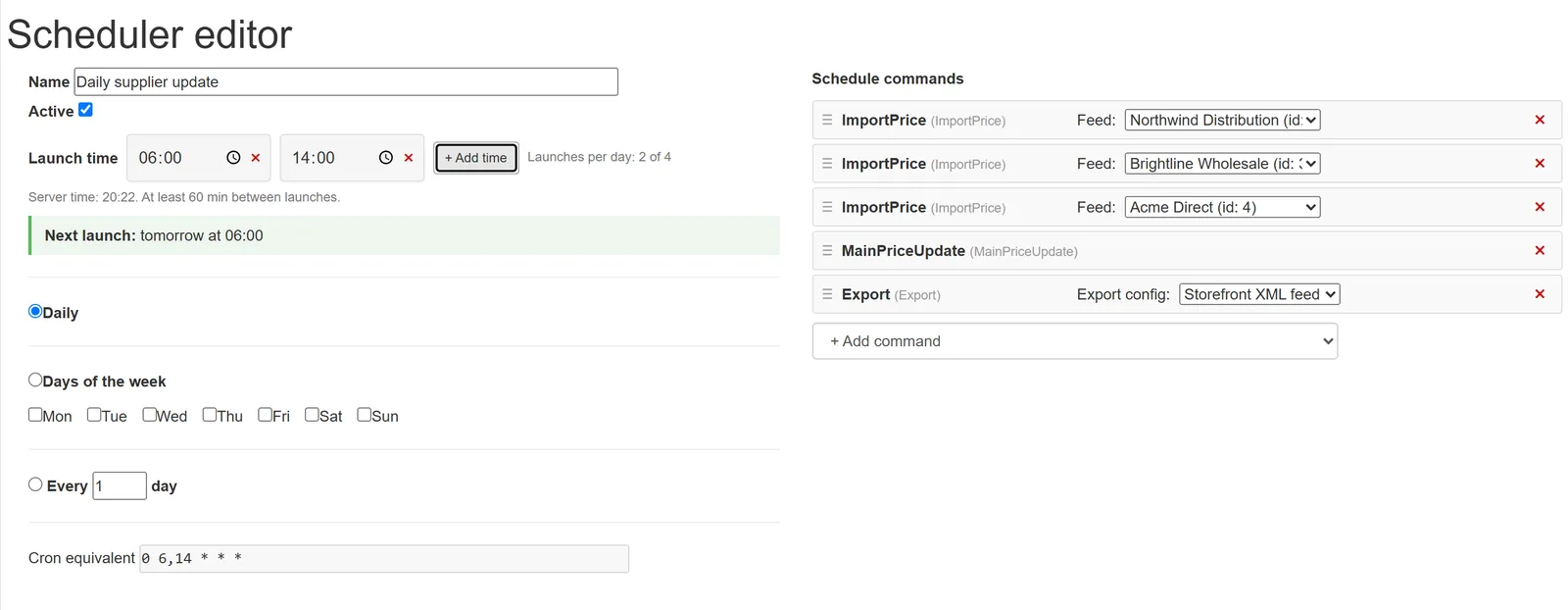
Daily monitoring is enough for most categories. More frequent checks make sense only where prices genuinely change during the day.
Step 6. Define who acts and how
Write down what happens when a threshold is crossed: who reviews it, which rule changes, and when it is acceptable to do nothing. Without this, monitoring becomes a report that nobody reads.
Step 7. Review and trim
After a month, remove products and competitors that never produced a useful signal, and add the ones you missed.
Price monitoring in YfiFX
YfiFX includes competitor price monitoring as part of the same service that processes your supplier price lists. Competitor prices are collected on a schedule and stored next to your purchase prices and markup rules, so repricing stays within your margin limits. Changes in prices, as well as new and missing products, are shown on charts over time, which makes it easier to tell a lasting trend from a short promotion.
Related Articles
Set it up once. YfiFX does the rest
14 Days Free Trial. Sign up and import your first price list today.